
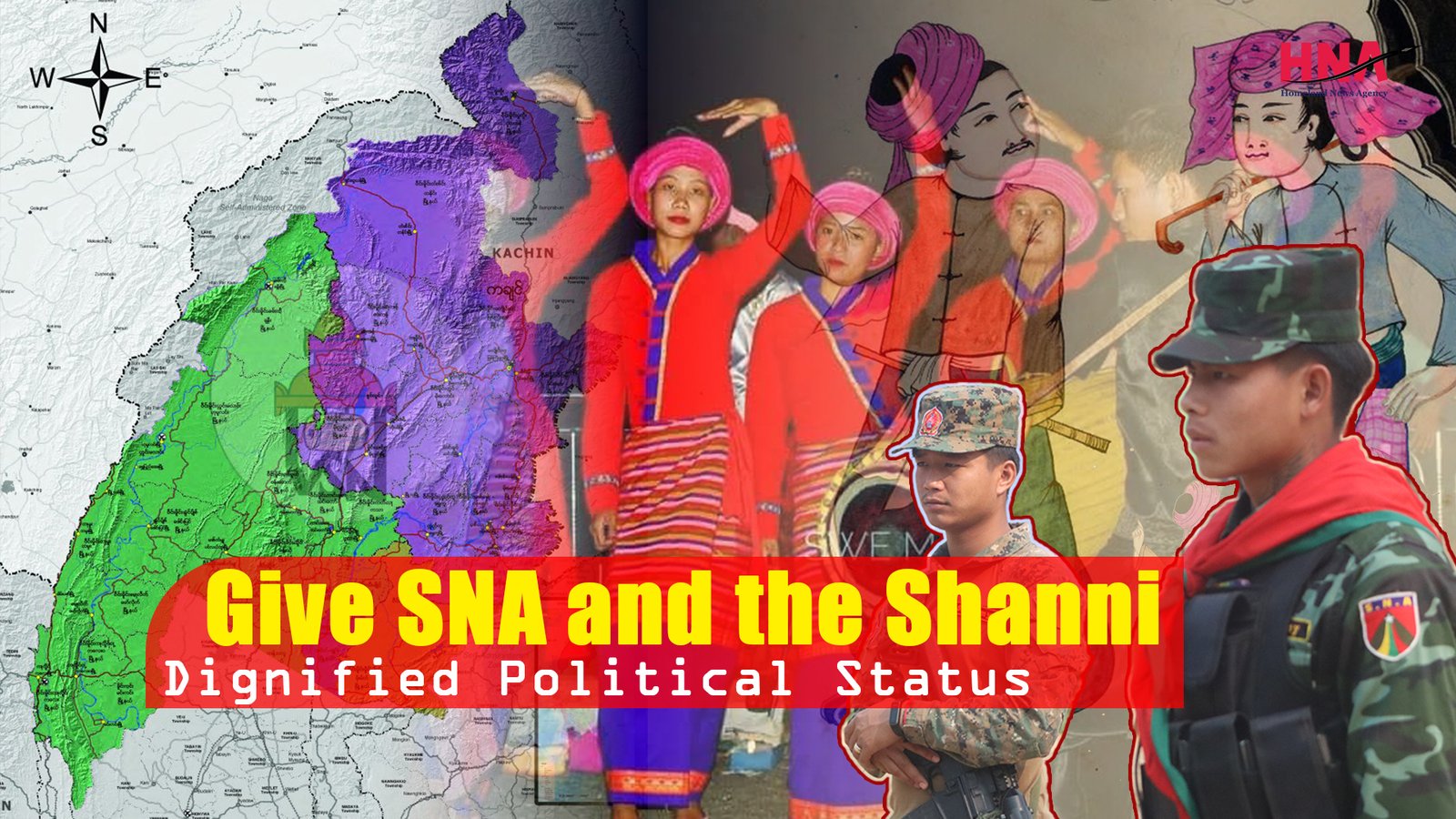
The Shanni Nationalities Army (SNA) and the National Solidarity and Peacemaking Negotiation Committee (NSPNC) met for talks in Nay Pyi Taw on June 4, 2026.
On another front, President U Min Aung Hlaing visited India from May 30 to June 3, 2026, where he held discussions with Indian Prime Minister Modi, the Indian National Security Advisor, and the Indian Minister of External Affairs.
Along the border areas connecting Myanmar and India, clashes have been breaking out between the Myanmar military and armed groups led by the KIA-AA-CNF, as well as between the SNA and armed groups led by the KIA.
Homeland News Agency contacted regional political analyst U Aung Kyaw to ask for his insights regarding these situations.
Q: During the new government’s peace invitation, we saw that the Shanni Nationalities Army (SNA) was the very first group to hold discussions with the National Solidarity and Peacemaking Negotiation Committee (NSPNC). This seems a bit unusual. How do you view this?
A: It is indeed a bit unusual that when the NSPNC initiated peace talks under the new government administration, the first group they met with was the Shanni armed group, the SNA. Because the NSPNC called the SNA for a meeting, it raises the question: Has the government designated the SNA as an Ethnic Armed Organization (EAO), or have they officially recognized it as a legitimate organization?
Previously, we heard rumors that the military wanted the SNA to become a People’s Militia Force or a Border Guard Force (BGF). Now, however, the NSPNC formally invited the SNA and held talks in Nay Pyi Taw, and the government itself officially released the news to the public. As a rule, the NSPNC’s procedures do not involve holding discussions with People’s Militias or BGFs, nor is there any need to do so. The NSPNC’s mandate is solely to invite and negotiate with Ethnic Armed Organizations (EAOs). Therefore, it is safe to assume that the government has recognized the SNA as an EAO.
Furthermore, if we look at and analyze the fact that they officially invited the SNA for talks and released a formal statement, the new government and the military must have many strategies in mind. These considerations likely involve both political and military calculations.
Specifically, this is a move to create a counter-balance against the Kachin Independence Army (KIA). Another factor is likely the developments arising from the recent trip to India.
Since the KIA is waging a liberation war in northwestern Myanmar, Sagaing Region has become an incredibly vital military, political, trade, and economic resource hub for them. Therefore, if the KIA can control Sagaing Region, they can connect the contiguous areas of Kachin, Sagaing, Chin, and Rakhine. This would transform the KIA from a landlocked entity into a liberated zone with access to the sea.
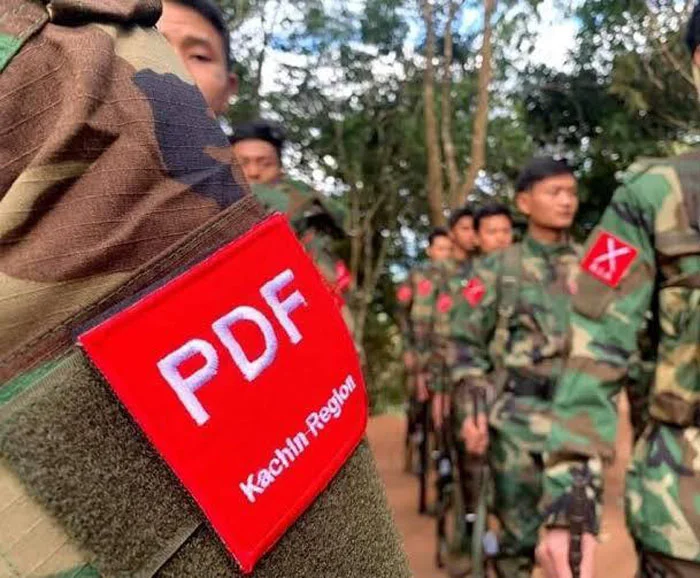
KIA/PDF Armed Forces
If things reach that stage, who could possibly control the KIA? Neither the Myanmar government nor the Myanmar military would be able to contain them. Because of this, the military and the government are making a strategic approach to the SNA—which holds a moderate amount of strength within Sagaing Region and Kachin State—likely factoring them into their calculations to counter and contain the KIA.
It is particularly critical for them that the SNA does not lean toward the KIA’s side. In other words, the government and the military will operate on the fundamental premise that the KIA and the SNA must not become allies. If so, how will the military and the government make a trade-off with the SNA to prevent it from joining the KIA? When making this deal, the government and the military might approach it by offering only the minimum necessary concessions.
Similarly, the KIA will also try to approach the SNA. When they do, what kind of deal will the KIA offer? So, if the SNA is clever, they could find themselves in a pivotal position within the power struggle between the military-government and the KIA. They might even have the luxury of choosing to align with whichever side offers a better price. Conversely, if the SNA lacks political shrewdness and fails to carefully analyze the local political and military situation—as well as the power struggle between the KIA and the military—they might end up accepting a compromise that offers very few real opportunities despite their crucial positioning.
These are simply my personal reflections and my perspective when analyzing regional conditions. That is why I believe the discussions between the NSPNC and the SNA could turn out to be a highly significant development.
Q: If so, can we assume that whether or not the KIA achieves its goal of liberating northwestern Myanmar is linked to some extent with the SNA?
A: You can see this clearly if you look at the practical situation on the ground. When the KIA implemented its objective to liberate northwestern Myanmar, it managed to mobilize almost all the armed forces operating and based along that northwestern corridor.
However, they have not yet been able to win over the Shanni armed force, the SNA. Because of this, if you look at how the towns the KIA previously fought for and captured are now gradually being lost again, you can tell whether or not the SNA is influential.
If we break it down in detail, the KIA has managed to mobilize forces like the AA, CNF, ABSDF, Naga ENNO, Naga PDF, Kuki KNA, Chin Brother (CB) group, and various local PDFs to fight on its side. Currently, these groups are indeed fighting the battles all along the northwestern region of Myanmar. Yet, the SNA is not involved. Why they are not involved is something worth thinking about. Because the SNA is not part of it, the weapons, ammunition, personnel, and goods flowing from Kachin State through Sagaing Region to Chin and Rakhine states cannot be transported as smoothly as intended. When the military launched its counter-offensive, the KIA’s allies faced shortages of weapons and ammunition, forcing them to retreat.
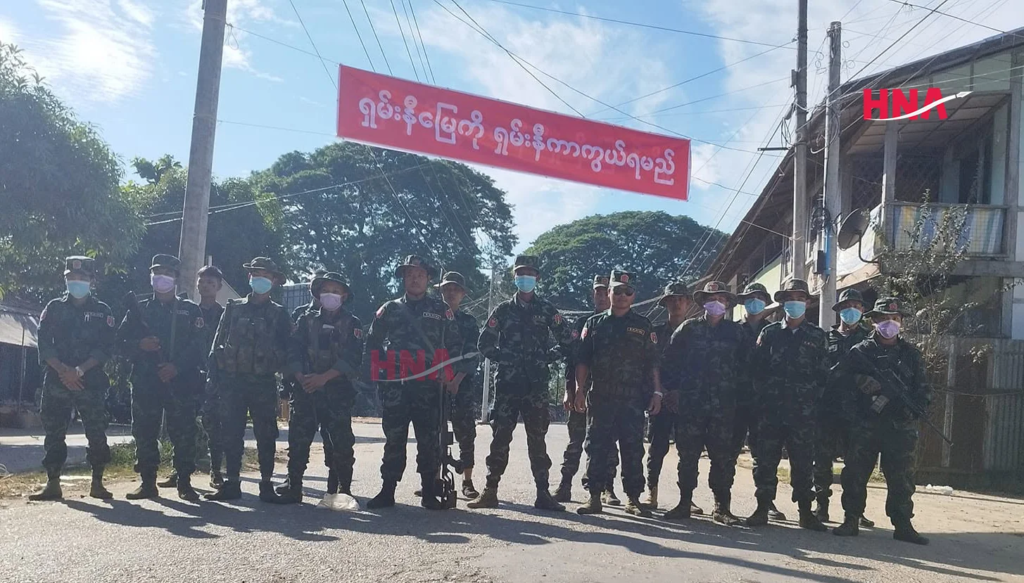
SNA forces undertaking security duties in Homalin
If the KIA had been able to mobilize the SNA to join their side in the northwestern liberation war, or if they had struck a successful deal, the upper and central parts of Sagaing Region would have fallen under the control of the KIA-led allied armed groups in no time. From there, by securing control over lower Sagaing Region and engaging the military in Mandalay and Magway regions to keep them from entering Sagaing, the military would have been left completely helpless.
Therefore, you could say that the SNA stands as an obstacle for the KIA, and there might be a strong realization within the KIA that they must forge an alliance with them to achieve their goals. Likewise, the military likely recognizes the necessity of keeping the SNA on its side so they don’t join the KIA. Because of this, the SNA is in a position where it has choices.
Consequently, both the KIA and the military will have to grant a dignified political status to the SNA and the Shanni people. They will likely find themselves in a situation where they must mobilize the SNA by offering such a political status. Otherwise, the SNA is highly likely to go to whoever offers a higher price.
Q: What kind of “dignified political status” do you think should be granted to the SNA and the Shanni people?
A: As for what exactly a dignified political status entails, I cannot say for certain since I am neither a member of the SNA nor of Shanni ethnicity. However, from my personal perspective, if it comes from the KIA’s side, for example, they would recognize the Shanni ethnicity and accept a Shanni territory. They would move forward by delineating administrative territories with the SNA. They would prevent and control armed and ethnic conflicts between the two communities and the two armed organizations. If a region is rich in natural resources, the SNA and the KIA would administer it jointly, and so forth.
On the military’s side, they could recognize the SNA as an Ethnic Armed Organization and allow them to sign the Nationwide Ceasefire Agreement (NCA). They could sign a separate Bilateral agreement between the SNA and the military that includes terms regarding administration, designation of troop movement areas, finances, and territorial demarcation to officially recognize the SNA. They could provide the necessary support and assistance for the Shanni people’s demand for a Self-Administered Zone, and allow them to attend state-level political dialogues and peace talks as recognized negotiating partners, among other things.
If they mobilize the SNA by making these kinds of concessions, I think it could work. Depending on this, the SNA might side with whoever offers more. How this is approached ultimately depends on the main actors involved. We can only look at it and analyze it from the outside.
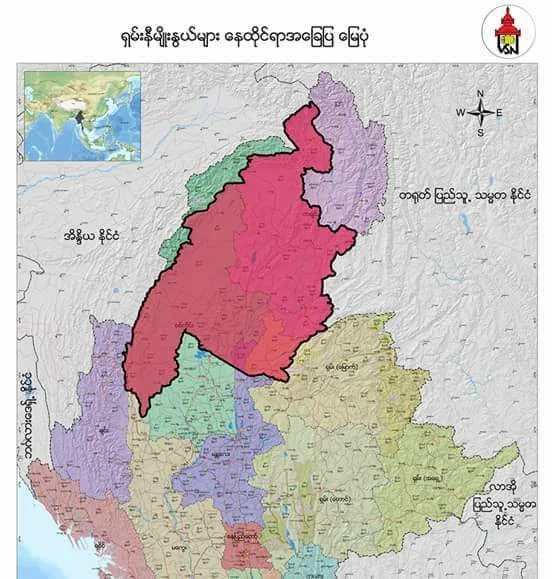
Map of Shanni Inhabited Areas
Q: We have heard reports that the military and the government are reluctant to allow new groups to sign the NCA. We have also heard statements suggesting that if there are no active clashes with a group, there is no need to enter into a Bilateral ceasefire agreement. If that is the case, what could happen? On the other hand, it seems it would be quite difficult for the KIA to concede territory. What are your thoughts on this?
A: The stance of the military and the government—refusing to let groups sign the NCA out of fear that new organizations will emerge—seems a bit flawed. Even if they are afraid of new groups forming, new groups keep appearing anyway. They should look for the root causes of why these new groups are emerging in the first place. Instead, simply denying them because they are afraid of new groups appearing won’t stop them from coming into existence. Look at how the AA, MNDAA, and TNLA grew incredibly strong precisely because of these kinds of stances.
Back in 2015, during President U Thein Sein’s administration, the AA, MNDAA, and TNLA expressed their desire to sign the NCA. At that time, the total strength of those three northern groups was only around 1,000 personnel, and they did not yet possess territory. However, the military and the government rejected and dismissed them. Now, look at what the situation has become today.
Even if the military and the government were to ask the AA, MNDAA, and TNLA to sign the NCA now, those three northern groups are highly unlikely to do so. This is because they have already acquired territories, administrations, and rights that go far beyond what the NCA offers, so they can no longer be enticed by it.
Similarly, the stance that a state- or region-level Bilateral ceasefire agreement can only be signed if there are active clashes, and cannot be signed if there are no clashes, is highly flawed. If that is the case, doesn’t it look like the military and the government do not truly want peace, but are instead intentionally pushing for clashes to happen? When an armed group asks to sign a Bilateral agreement because they want to avoid fighting, and the response is that it can only be signed if there is fighting, anyone with analytical skills can understand what will happen next.
Ultimately, there are plenty of ways to sign a Bilateral agreement without active fighting. For instance, instead of using the title “Bilateral Ceasefire Agreement,” they could sign a Bilateral agreement under the title “Agreement on Cooperation for Regional Stability, Development, and Peace.” Within that framework, they could define troop movement zones, establish administrative power-sharing, and handle financial, tax collection, and economic allocations. This way, there would be no need for clashes. Both sides could reach a mutual understanding without a single battle taking place.
President Min Aung Hlaing himself has stated that armed groups should not demand their desires through armed struggle, but should instead meet, discuss, and negotiate their stances and desires through political means.
If the very teams, committees, or representatives assigned by the President to negotiate for peace are saying that groups cannot sign the NCA or a Bilateral agreement because there are no clashes, and that they can only do so if fighting occurs, it raises a serious question: Are they working to ensure the failure of the President’s peace process? That is how I see it.
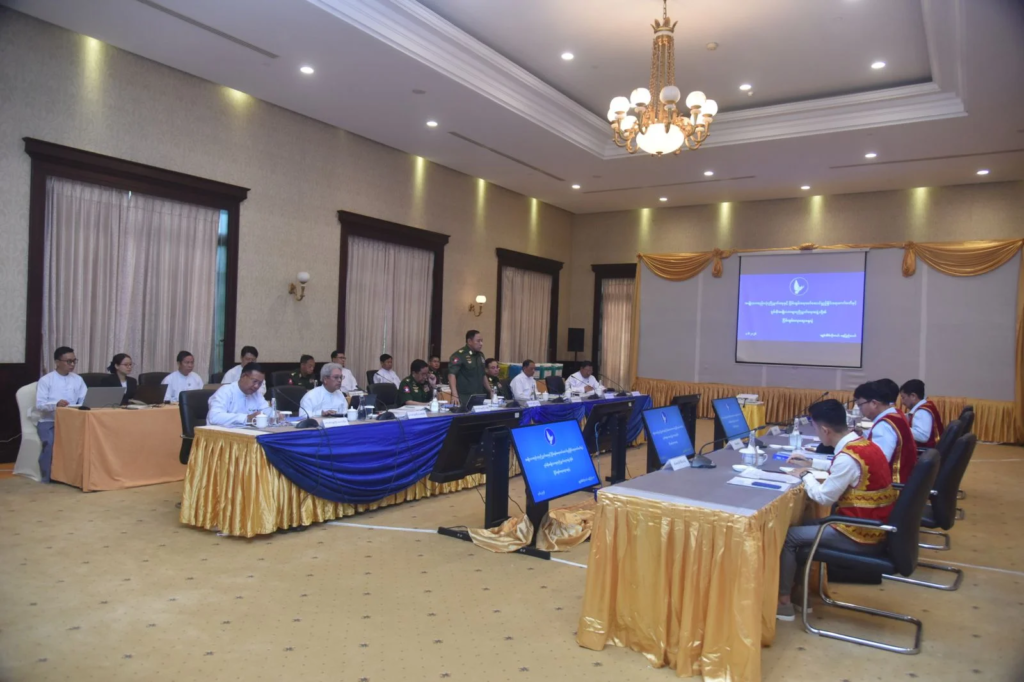
NSPNC and SNUC/SNA holding peace talks in Nay Pyi Taw (June 4, 2026)
Q: We are now seeing reports that the SNA is demanding Shanni self-administration. However, there are also counter-arguments pointing out that there is no distinct ethnic group called “Shanni,” and that only the names “Tai Leng” or “Tai Lai” exist. How do you think this situation can be resolved through negotiation?
A: We see that the government has stated there are 135 ethnic groups in Myanmar. On the ground, there could actually be more or less than that; no one can say for sure. However, from what I understand, whether it is Shanni, Tai Lai, or Tai Leng, they are the same. The reason this has become a point of contention is likely because the name differs from the ethnic codes registered by the Ministry of Immigration and Population (Immigration).
The ethnic name recorded at the Immigration office might be Tai Lai or Tai Leng. Now, because the SNA uses the term “Shanni,” the government and the military seem to view it as a demand coming from an entirely new ethnic group. Or perhaps they know the truth but are refusing to concede due to some other underlying reason; only they would know.
Normally, the military and the government practice a policy of Burmanization, trying to absorb everyone into Bamar culture. Now, the Shanni are adopting the name “Shanni” by modifying “Tai Lai” or “Tai Leng” into a more Bamar-aligned term. Doesn’t this actually align with their desire for Burmanization? There is nothing wrong with accepting it.
In the past, during U Thein Sein’s administration in 2016, there was a village called Mong Wong in the Tarmoenye area of Shan State. The majority of the inhabitants in that Mong Wong village were Chinese, including Chinese migrants who had moved from mainland China. At that time, U Thein Sein used his presidential authority to designate them as an ethnic group called “Mong Wong (Bamar).” They were also issued National Verification and Citizenship Cards. Why was that possible back then?
At that time, records show that U Myint Kyaing, who was the Permanent Secretary of the Ministry of Immigration, told journalists that this action was taken in accordance with the authority granted to the State President under Chapter 2, Section 8 of the 1982 Citizenship Law.
Another example is from U Nu’s era, when, in order to win an election, the people currently referred to as Bengalis in Rakhine State were designated as “Rohingya,” given voting rights in the election, and even granted a slot on the national radio broadcast.
Looking at these instances, it is evident that those in power within the military and the government utilize these mechanisms when it suits their needs, but create obstacles out of minor issues when they don’t need them or when they are not facing major pressure.
Therefore, the Shanni people should also try demanding and negotiating to be designated as “Shanni” under the presidential authority of Chapter 2, Section 8 of the 1982 Citizenship Law. If they maintain good relations with the military or the government, and if they can be utilized politically, I think the authorities might consider it. That is my view on the matter.
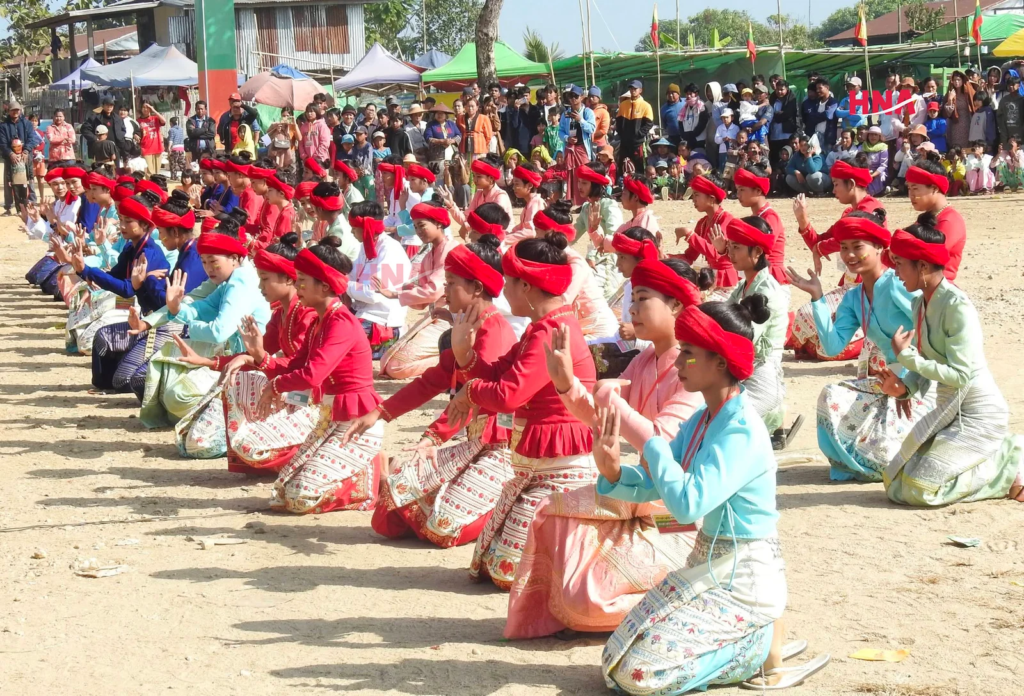
Shanni (Tai Leng) ethnic people
Q: I have one final question. President U Min Aung Hlaing visited India from May 30 to June 3. Do you think this visit will help bring an end to the armed conflicts along the India-Myanmar border, or is it a situation that could cause the wars to intensify further?**
A: President U Min Aung Hlaing’s trip to India is quite interesting, as it marks his first foreign visit as the president of the transition government. Moreover, India is a neighboring country contiguous with the very regions where the KIA’s military objective to liberate northwestern Myanmar is centered.
During the India trip, we saw President U Min Aung Hlaing hold discussions with Indian Prime Minister Modi, the Minister of External Affairs, the National Security Advisor, and the Indian President, as well as with business leaders.
The statement made by Indian Prime Minister Modi during the visit was particularly intriguing. He requested the suppression of insurgents operating inside Myanmar who are acting against India. He also mentioned that Myanmar is a crucial nation for India’s “Neighborhood First,” “Act East,” and “Indo-Pacific” policies.
If India approaches Myanmar through these policies, stability and peace in Myanmar become essential. In particular, there must be an absence of armed conflict in the Myanmar territories bordering India. That is likely how India will think. If they think along those lines, we can see that the conflict is currently escalating in the Myanmar territories bordering India—namely Rakhine, Chin, Sagaing, and Kachin. Therefore, India will have to consider how to halt these conflicts, how to cooperate with the Myanmar government, and how to deal with the armed groups.
For instance, in Rakhine, the Kaladan Multi-Modal Transit Transport Project is being implemented. Clashes are occurring in that area. Because security is extremely weak, the project cannot move forward. So, how will they strike a deal with the AA? They will certainly weigh what would happen if they choose not to make a deal and instead maintain relations exclusively with the Myanmar government.
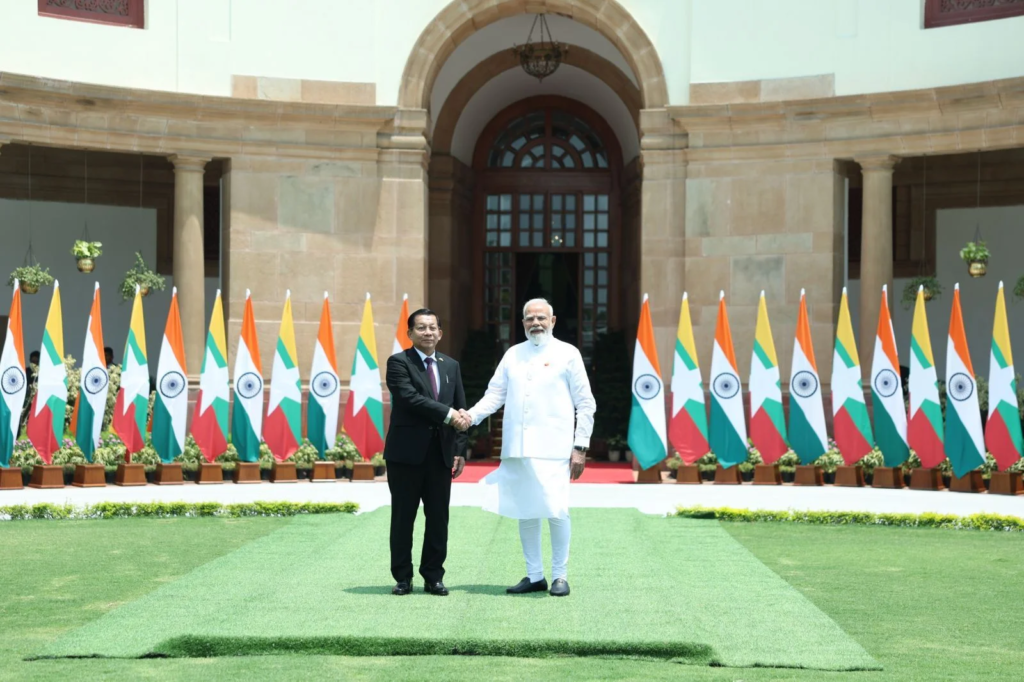
President Min Aung Hlaing and Indian Prime Minister Narendra Modi during the visit to India
Furthermore, Chin State shares a border with Mizoram State, where border trade is conducted, and a road is being constructed through Paletwa township for the Kaladan project. Thus, they will have to consider how to negotiate with the CNF, as well as with other armed groups present within Chin State.
Looking at Sagaing Region, intense battles are raging between the military, the SNA, and KIA-led armed groups. Consequently, the implementation of the India-Myanmar-Thailand Trilateral Highway project and the reopening of Tamu border trade cannot be realized. In addition, India’s national security is bound to face threats due to the influx of refugees into India and cross-border drug trafficking.
Amidst this, insurgent groups fighting against India are based inside Sagaing Region, and since Sagaing Region is the primary target of the KIA-led armed groups’ northwestern liberation objective, regional stability in Sagaing is likely a top priority for India.
Therefore, when meeting with Myanmar President U Min Aung Hlaing within this complex landscape, India is likely to discuss: (1) restoring peace and stability across Sagaing Region, (2) implementing the India-Myanmar-Thailand Trilateral Highway, (3) the KIA’s northwestern military objective and the potential involvement of the United States, (4) cooperation in rare earth mining in Myanmar, (5) how to resume the Kaladan project, (6) the drug trafficking problem flowing from Myanmar into India, and (7) suppressing the insurgents fighting against India.
If these issues were indeed discussed, the Myanmar military is likely to prioritize stabilizing Sagaing Region through Myanmar-India cooperation. To do this, the Myanmar military will require significant manpower—specifically forces that are familiar with the local terrain and possess strong combat capabilities.
If so, think about which force the military will approach within Sagaing Region. Currently, the only group actively engaging the KIA in Sagaing Region is the SNA. Therefore, the military will definitely offer some concessions to the SNA and utilize them in the process to be implemented by Myanmar and India. This is why the SNA becomes pivotal in the Sagaing Region stabilization process. If the SNA leaders can assess all these overlapping factors comprehensively, demand a dignified political status for their organization and the Shanni people, and strike a successful deal, they stand to gain substantial benefits.
Otherwise, they could end up being drawn into the political and military traps of the military, concluding the matter without securing any real guarantees or achieving a dignified political status. Similarly, if the KIA can successfully sway and mobilize the SNA to join their side, the KIA’s objectives could be fully realized.
The military cannot freely mobilize groups like the Meitei and Naga armed groups in the same way they can with the SNA. This is because those groups are actively fighting against India. At a time when India is requesting the suppression of those very groups, the military cannot strike deals with them if it wants to cooperate with India. Therefore, when you think it through, consider for yourself who they will ultimately turn to approach.
Q: Do you have any final remarks to add regarding the questions asked?
A: I simply want to see peace restored in Myanmar as quickly as possible. When engaging in peace talks, I want all parties to be honest and magnanimous. I hope they do not evaluate and discuss everything strictly through the lens of national security. If they approach discussions from the perspective of justice and equality, I believe positive and constructive results will emerge much faster.